
There was a time when finding a typo felt like discovering a crack in the foundation. I remember spending hours hunched over manuscripts, scanning line after line for misplaced commas or passive voice errors that would trip up a reader. Today, the landscape looks vastly different. We carry powerful AI grammar checkers in our pockets, tools that promise perfection with a single click. But after years of working professionally in publishing and digital content, I’ve learned that these tools are powerful assistants, not infallible gods.
If you’re wondering whether an automated editor is worth the subscription fee, or if you’re worried about how it might change your voice, you aren’t alone. This technology has evolved rapidly, shifting from simple spell-checkers to complex natural language processing engines that understand context. Here is what really matters when you integrate one into your workflow.
The Shift from Rules to Context
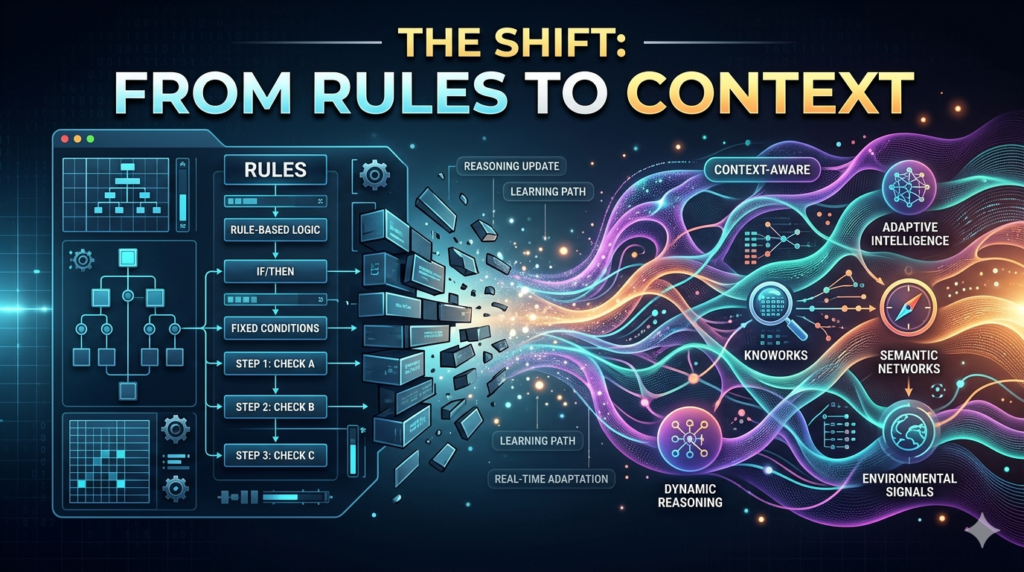
Old-school software relied on rigid dictionaries and pattern matching. If you wrote their instead of there, it knew instantly. But modern grammar correction tools operate differently. They analyze semantics the meaning behind the words rather than just syntax. Take a sentence like, They saw the bats flying overhead. Is it a sporting equipment store or winged mammals? A basic spellchecker wouldn’t blink.
An advanced writing assistant, however, looks at surrounding sentences to infer context. It’s a massive leap forward. I recall working on a project where the AI flagged a stylistic choice as an error because it was less common, but within our specific industry jargon, it was perfectly accurate. That interaction highlighted a key truth: AI knows rules; humans know nuances.
Why Writers Are Turning to Automation
Why bother? Because even the best editors suffer from fatigue. When you stare at a document long enough, your brain auto-corrects errors before you see them. An editing software suite acts as a fresh pair of eyes. The biggest benefit isn’t just catching mistakes; it’s speed. I used to spend thirty minutes proofreading a thousand-word blog post. Now, with smart suggestions enabled, that process takes five. More importantly, these tools serve as training wheels. Over time, noticing consistent corrections helps you internalize patterns.
You start avoiding passive voice structures or run-on sentences organically because the tool nudged you often enough to break the habit. However, there is a flip side. Over-reliance can atrophy your own critical faculties. If you accept every suggestion blindly, your writing begins to sound homogenized. Many articles online today share a similar rhythm because they were polished through the same algorithmic lens. To maintain authenticity, you have to treat the suggestions as recommendations, not commands.
Privacy and Data Security

One area that keeps many professionals up at night is data privacy. When you paste sensitive client work into a cloud-based proofreading tool, where does that text go? Most reputable companies state they don’t train their models on user input, but terms of service can be murky.
For corporate writers or legal professionals, this is a non starter. I’ve seen instances where confidential drafts were inadvertently exposed due to shared account credentials or aggressive syncing features. If you handle proprietary information, look for enterprise-grade security protocols or offline versions of the software. Don’t let the convenience of instant feedback compromise the confidentiality of your work.
The Ethical Gray Area
We also need to talk about academic and professional integrity. Using an AI grammar checker to polish your writing is widely accepted, much like using a dictionary. But when does polishing become rewriting? Some platforms now offer generative features that rewrite entire paragraphs for clarity or creativity.
While useful for overcoming writer’s block, relying on them to generate ideas or arguments crosses a line. It risks stripping away your unique perspective. I always tell junior copywriters: let the tool fix the mechanics, but you must own the message. If you lose your voice in the pursuit of perfect grammar, the content becomes sterile and forgettable.
Choosing the Right Companion
Not all tools are created equal. Some excel at academic rigor, while others are tailored for marketing copy or coding documentation.
- For General Writing: Look for broad coverage that handles idioms and slang well.
- For Business: Prioritize tone analysis. Can the tool distinguish between assertive and aggressive?
- For Creative Work: Be cautious. Poetry and fiction rely on breaking rules, and an algorithm might try to “fix” art into something bland.
Read the reviews, yes, but test the free version yourself. Paste a paragraph of your own writing and see how it interprets your intent. If it changes the meaning while fixing the spelling, it’s not ready for prime time.
The Verdict
At the end of the day, an AI grammar checker is a fantastic partner, but never the final decision-maker. It handles the tedious cleanup so you can focus on storytelling and strategy. My advice? Use it to catch what you missed, not to dictate what you mean. Technology moves fast, but the connection between writer and reader remains timeless. Protect that connection.
FAQs
Q: Will using an AI grammar checker hurt my writing skills?
A: Only if you accept every suggestion without thinking. Used correctly, it highlights patterns and teaches better habits, actually improving your skills over time.
Q: Are AI checkers good at catching tone issues?
A: Modern tools can detect formality levels and sentiment, but they often miss sarcasm, irony, or cultural subtleties that a human reader would catch.
Q: Can I rely on them for academic citations?
A: No. While some tools check for formatting consistency, they do not verify sources or ensure academic integrity. Always double-check references manually.
Q: Is my private data safe with these tools?
A: Most major providers claim data privacy, but you should review their terms of service. Sensitive documents should ideally be reviewed via offline software versions.
Q: How do I know if a suggestion is actually correct?
A: Understand the underlying grammar rule. If a suggestion feels awkward, trust your instinct. Good grammar serves clarity, not just rigid adherence to rules.
