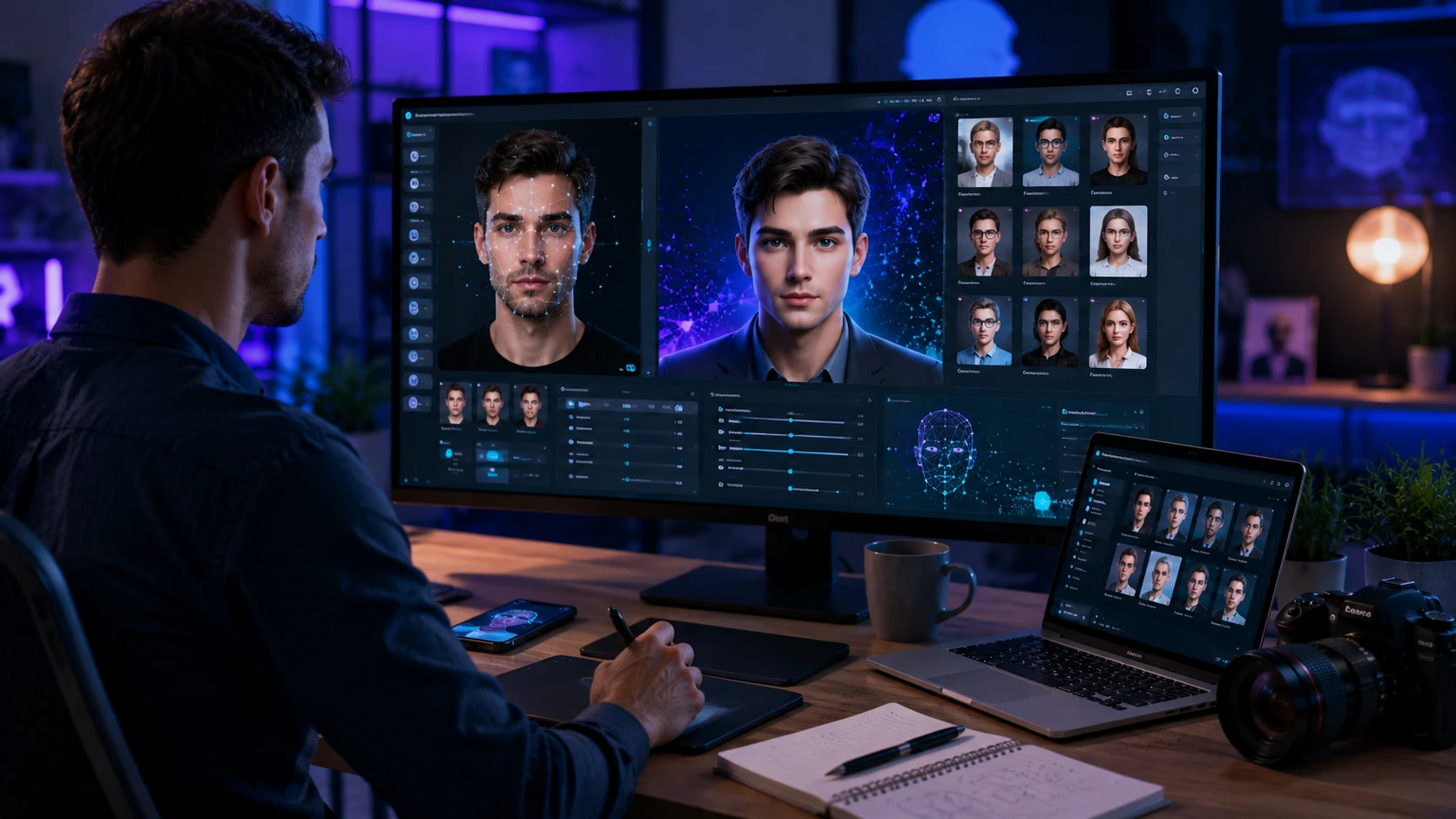
There’s a moment I remember pretty clearly sitting in a small podcast studio, watching a friend redo the same 20-second intro for the fourth time because he kept stumbling over the brand name. We spent nearly two hours on what should’ve been a five minute job. That was a few years back. Today, he just types the script, picks a voice, and exports the file in under a minute. That’s the practical reality of AI voice generators in 2026.
They’re not science fiction anymore. They’re tools sitting in browser tabs, used by YouTubers, educators, marketing teams, and indie game developers around the world. But like any powerful technology, they come with nuance. Let me walk you through what these tools actually do, how to choose one intelligently, and where the real limitations and ethical questions live.
What Exactly Is an AI Voice Generator?
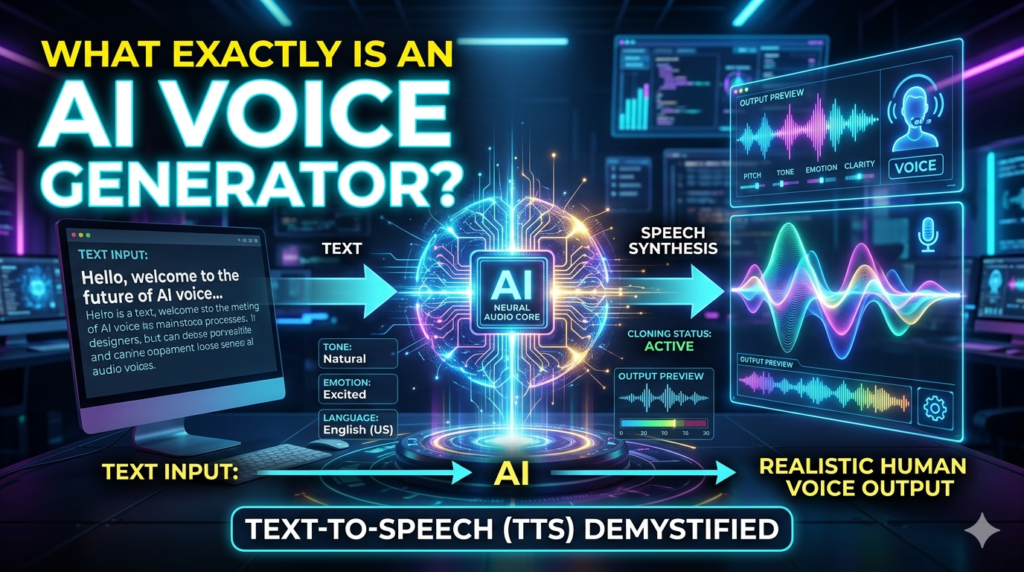
An AI voice generator is software that converts written text into spoken audio using machine learning models. Unlike the robotic text-to-speech systems from the early 2000s that sounded like a GPS having an existential crisis, modern AI voice generators produce speech that’s remarkably natural with proper pacing, emotional tone, and even subtle breathing patterns. The underlying technology has evolved significantly. Most current tools use deep learning models trained on thousands of hours of human speech.
The model learns how humans modulate pitch, emphasize syllables, pause between thoughts, and adjust tone based on context. Some newer systems go a step further with voice cloning the ability to replicate a specific person’s voice from a short audio sample. Popular platforms in this space include Eleven Labs, Murph, Descript, Speechify, and Play.ht, among others. Each has a slightly different focus, but the core promise is the same: give us text, get back a human-sounding voice.
Real Use Cases That Actually Make Sense
One of the biggest misconceptions is that AI voice generators are only for tech companies or large media teams. In reality, the everyday use cases are surprisingly broad.
E-learning and online courses: are probably the most common application. Course creators who aren’t comfortable on the mic or who work in multiple languages use AI voices to narrate lessons. The quality is good enough that most students don’t notice or particularly care.
YouTube and video content: is another massive use case. A growing number of faceless YouTube channels rely entirely on AI-generated narration. Some of these channels have hundreds of thousands of subscribers. The voice becomes part of the brand.
Audiobooks and long-form content: have also seen meaningful adoption. Independent authors who can’t afford professional voice actors or who want to publish in multiple languages simultaneously use these tools to bring their work to audio format.
For businesses, IVR systems and customer service automation have long relied on text to speech. The difference now is that customers don’t immediately hang up in frustration.
Choosing the Right Tool: What to Actually Compare
Not all AI voice generators are built the same. Here’s what genuinely matters when you’re evaluating one.
Voice variety and naturalness: Listen critically. Many platforms offer demo samples. Pay attention to how the voice handles questions, lists, and emotional moments. Some tools sound great on flat narration but fall apart on conversational content.
Language and accent support: If your audience is multilingual or regional, this is non-negotiable. Eleven Labs, for instance, has strong multilingual support. Murk leans heavily into American and British English varieties.
Customization options: Can you adjust speed, pitch, emphasis, and pauses? The more granular the control, the more professional your output will sound. Some platforms let you insert SSML (Speech Synthesis Markup Language) tags for precise control.
Voice cloning: If you want to create a consistent branded voice or preserve your own voice for future use, look for platforms that offer ethical cloning features with proper consent frameworks built in.
Pricing and export limits: Many platforms operate on character-count or word-count limits per month. Do the math before committing. If you’re producing a 10,000-word audiobook monthly, a starter plan probably won’t cut it.
The Ethical Side That Doesn’t Get Talked About Enough
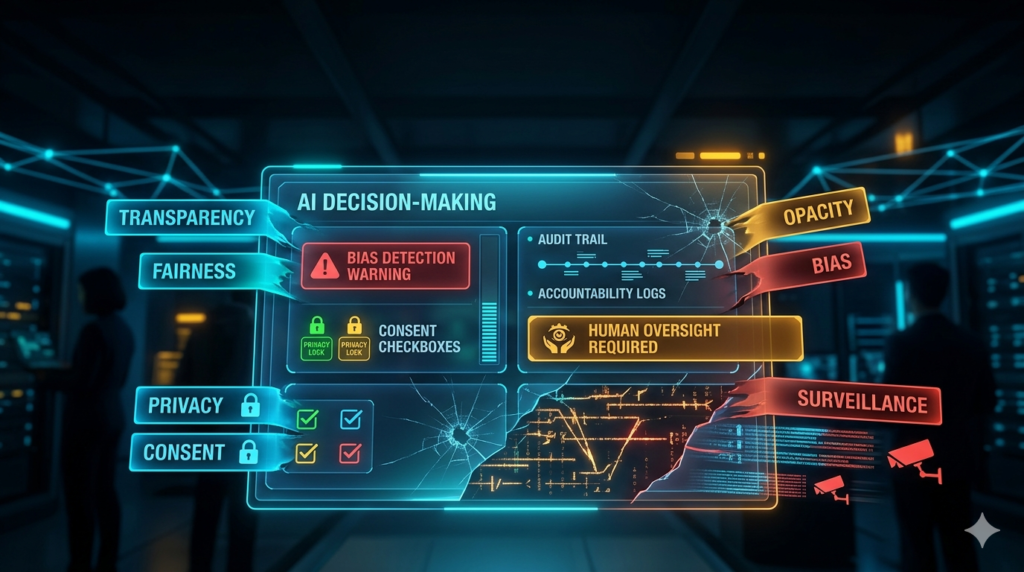
Here’s where I want to slow down, because this matters. Voice cloning technology is genuinely powerful and genuinely risky. There have already been documented cases of voice cloning being used in fraud schemes, deep fake audio, and political misinformation. When someone’s voice can be replicated from a 15-second sample, the potential for misuse is real. Responsible platforms have started implementing consent verification systems requiring proof that you own or have rights to any voice being cloned. But enforcement is inconsistent across the industry.
For content creators, the ethical question is simpler but still worth asking: Are you being transparent with your audience? If your entire podcast or video channel uses an AI voice, should your listeners know? Many creators now disclose this voluntarily, and audiences generally respond well to honesty. There’s also the question of voice actors and narrators whose livelihoods are directly affected by this technology. This isn’t a simple technology always win situation. It’s worth thinking about who you hire when human creativity and performance genuinely serve the work better.
Common Mistakes to Avoid
Even good tools produce bad results when used carelessly. A few things to watch for:
Don’t ignore punctuation in your script AI voices read exactly what you give them. Commas, periods, and dashes directly affect pacing. Don’t assume one voice fits all content. A calm, measured voice might work perfectly for a meditation app and completely wrong for a sports highlight video.
Always do a full listen-through before publishing. AI voices occasionally mispronounce uncommon words, names, or industry terms. Most platforms let you correct pronunciation manually.
FAQs
Q: What is the best AI voice generator available right now?
A: Eleven Labs is widely considered the top choice for voice quality and realism. Murph is excellent for professional presentations. Descript is great if you’re also editing audio/video in the same workflow.
Q: Can AI voice generators clone my voice?
A: Yes, several platforms offer voice cloning. Eleven Labs and Resemble AI are notable examples. You typically need a short audio sample and must agree to usage terms.
Q: Are AI-generated voices detectable?
A: Increasingly yes detection tools exist, but they’re not foolproof. In most casual listening contexts, high quality AI voices pass as human.
Q: Is it legal to use AI voice generators commercially?
A: Generally yes, as long as you follow the platform’s licensing terms. Using a cloned voice without consent can have legal consequences.
Q: Do AI voice generators support multiple languages?
A: Most modern platforms support dozens of languages. Always test with a native speaker sample before relying on a specific language output professionally.
Q: How much do AI voice generators cost?
A: Pricing varies widely. Free tiers exist but are limited. Paid plans typically range from $20 to $100+ per month depending on usage volume and features.
