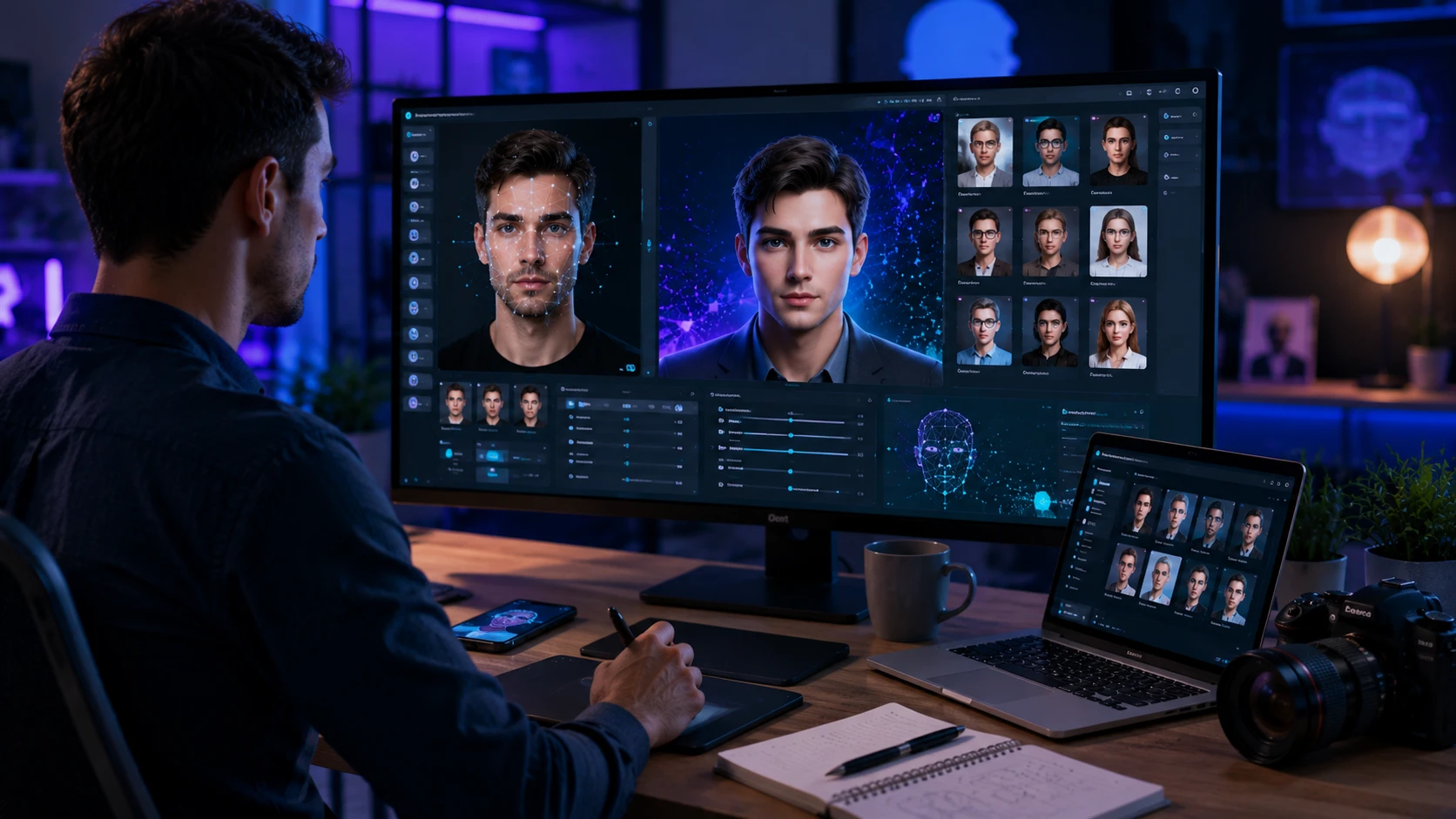
I remember the first time I saw a photorealistic image of a person who didn’t exist. It wasn’t on a movie screen or in a sci fi novel; it was on a LinkedIn profile. The eyes were slightly too perfect, the skin texture uniform, the background just a little too blurred. It was an AI avatar, and it was unsettlingly good. That moment marked a shift for me a realization that our digital identities are no longer bound strictly by the photos we take or the selfies we crop.
Today, the landscape of digital identity is undergoing a seismic shift, driven by the rapid evolution of AI avatar creators. These tools, ranging from mobile apps to sophisticated enterprise platforms, are changing how we present ourselves online, how brands market products, and even how we preserve memories. But as with any powerful technology, the convenience comes with a complex web of ethical considerations and technical limitations that we’re only just beginning to untangle.
What Exactly is an AI Avatar Creator?
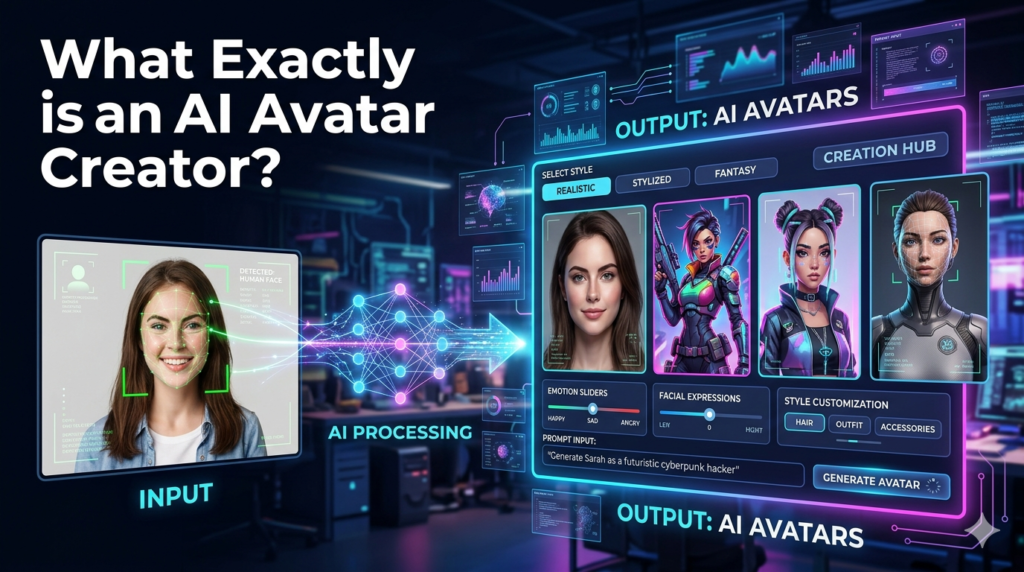
At its core, an AI avatar creator is a software application that uses machine learning models specifically generative adversarial networks (GANs) and diffusion models to generate or stylize images of human faces. Unlike the cartoonish avatars of the early 2010s, modern AI generators don’t just apply a filter; they synthesize new pixels based on learned data.
The process usually starts with a seed. This could be a real photograph of yourself, a text prompt describing a desired look, or a set of 3D parameters you adjust manually. The AI then interprets this input, blending it with the vast dataset it was trained on, to produce a visual output.
There are generally two distinct categories of these tools:
- Self-Replicators: Apps like LENSAR AI or Remini that take your real photos and transform them into stylized portraits, anime characters, or hyper realistic professional headshots.
- Text-to-Image Generators: Platforms like Mid journey, DALL-E 3, or Stable Diffusion that allow you to type a description (a cinematic portrait of a 30-year-old woman with curly hair in a neon-lit Tokyo street) and generate a face from scratch.
The Practical Magic: Why We’re Using Them
The adoption of AI avatars isn’t just a novelty; it’s driven by very practical needs across different sectors.
1. Professional Branding and Remote Work
The pandemic normalized remote work, but it also highlighted a lack of professional polish in our digital presence. Not everyone has the budget or time to hire a photographer for a LinkedIn headshot. I’ve seen colleagues use tools like HeadshotPro or Fotor’s AI headshot generator to create clean, studio-quality profile pictures for their company intranets. For freelancers and gig workers, a polished avatar can serve as a digital business card, conveying competence without the distraction of a cluttered home office background.
2. Gaming and the Metaverse
In virtual worlds, identity is fluid. Gamers have long customized avatars, but AI is taking this to new heights. Instead of selecting from a limited menu of preset faces, players can now scan their own faces and have AI map them onto 3D models with realistic textures. This creates a deeper sense of immersion and ownership. I recently spoke with a developer who used an AI texture generator to create unique skin details for non player characters (NPCs) in an indie game, saving weeks of manual texturing work.
3. Content Creation and Privacy
For content creators on platforms like YouTube or TikTok, privacy is a growing concern. Some creators prefer not to show their real faces due to harassment or doxing risks. AI avatars offer a solution: a consistent visual identity that can speak, emote, and react without revealing the person behind the camera. Tools like Synthesis even allow users to create video avatars that lip sync to audio, used widely in corporate training and e learning modules.
4. Creative Exploration and Art
Beyond utility, there’s the sheer joy of creation. Artists use these tools as a starting point, a way to brainstorm character designs or visualize concepts that would take hours to sketch manually. It’s a collaboration between human intent and machine execution.
The Technical Reality: Limitations and “The Uncanny Valley”
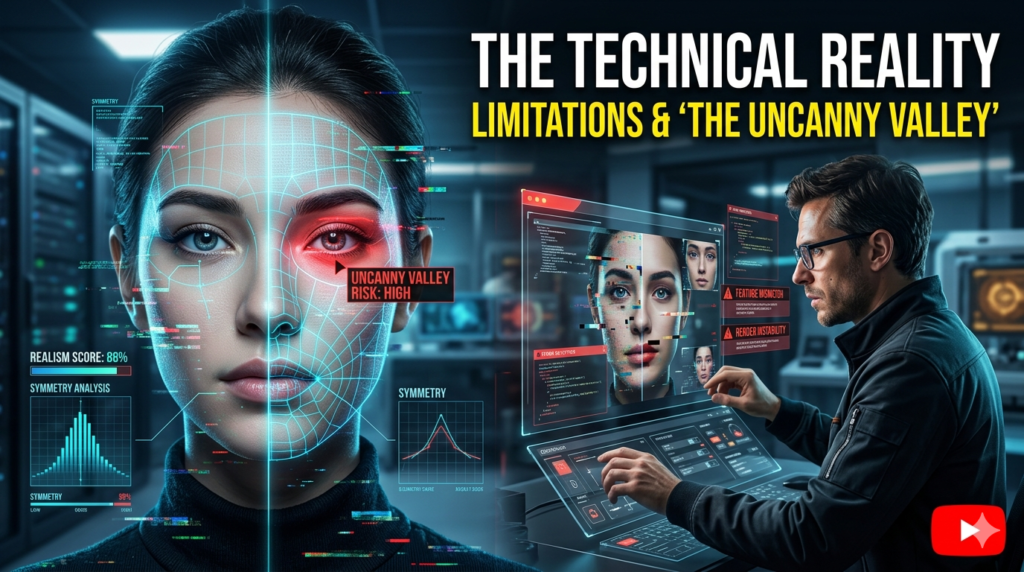
While the results can be stunning, anyone who has spent time tweaking prompts knows the frustrations. The technology is impressive, but it’s not magic. The most common hurdle is the uncanny valley the eerie feeling when something looks almost human but not quite. AI often struggles with hands (generating six fingers is a classic trope), text rendering within images, and complex physics like hair movement. I’ve generated hundreds of avatars for a personal project, and the failure rate is still high. You might get nine unusable images for every one keeper.
Furthermore, there’s the issue of consistency. If you’re using an AI avatar for branding, maintaining a consistent look across different generations can be difficult. Slight variations in facial structure, lighting, or expression can make the avatar feel disjointed, which undermines its purpose as a recognizable identity marker.
The Ethical Quagmire: Ownership, Bias, and Misinformation
As an observer of this tech, I can’t ignore the ethical minefield. The rapid rise of AI avatars has outpaced our legal and social frameworks.
1. Data Privacy and Consent
Many avatar apps require you to upload photos. Where do those photos go? How are they stored? In 2026, several popular avatar apps faced backlash for their vague privacy policies, with concerns that user photos were being used to further train models without explicit consent. When you upload a photo of your face, you are essentially handing over biometric data. It’s crucial to read the terms of service something most of us skip.
2. Algorithmic Bias
AI models are only as good as the data they’re trained on. If the training dataset lacks diversity, the output will reflect that bias. I’ve tested several professional headshot generators and noticed they often default to lighter skin tones or Eurocentric features when given vague prompts. While developers are working to mitigate this, it remains a persistent issue. Users need to be aware that these tools can inadvertently perpetuate stereotypes if not used with specific, inclusive prompting.
3. Deep fakes and Misinformation
The democratization of face generation brings the danger of deep fakes. It’s becoming increasingly easy to create a realistic avatar of a public figure saying something they never did. While current tools have safeguards most refuse to generate images of real celebrities or politicians without permission these guardrails are porous. The potential for reputational damage and misinformation is the darkest side of this technology.
4. Copyright and Intellectual Property
Who owns an AI-generated avatar? If I type a prompt and the AI generates an image, is it mine? In the US, the Copyright Office has stated that purely AI-generated works without human authorship cannot be copyrighted. However, if a human significantly modifies the output, it might be. This legal gray area is particularly relevant for businesses using AI avatars for marketing. You don’t want to build a brand identity on an image you might not legally own.
The Future of Digital Identity
Looking ahead, the line between real and generated will blur further. We are moving toward neural rendering, where avatars will be generated in real-time video streams, allowing for live translation and expression mapping in video calls. Imagine a future Zoom meeting where your avatar mirrors your expressions perfectly, but you’re presenting from a beach in Bali (virtually, of course).
However, I believe the most successful use of AI avatars will be those that augment, rather than replace, human connection. The best avatars today are stylized representations, not attempts to fool people into thinking they are real. They serve as a bridge, not a mask.
Conclusion
The AI avatar creator is a powerful tool in our digital arsenal. It democratizes high-end visual creation, protects privacy, and unlocks new forms of artistic expression. But it demands a critical eye. As we embrace these digital selves, we must remain vigilant about the ethics of data usage, the reality of algorithmic bias, and the importance of authenticity.
Whether you’re a gamer, a freelancer, or a corporate executive, the question is no longer if you can create an AI avatar, but how you will use it responsibly. The technology is here to stay, but our humanity—the nuance, the empathy, the imperfection—should always remain at the forefront.
FAQs
Q: Are AI avatar creators free to use?
A: Many apps offer a free tier with limited generations or lower resolution, but high quality, commercial use avatars usually require a subscription or one time payment.
Q: Can I use my AI avatar for business purposes?
A: Yes, but check the licensing agreement of the tool you use. Some platforms grant full commercial rights, while others restrict usage or require attribution.
Q: How do AI avatar generators handle privacy?
A: It varies. Reputable tools process images on secure servers and often delete source photos after processing. However, always review the privacy policy before uploading sensitive photos.
Q: Do I need a powerful computer to create AI avatars?
A: Not necessarily. Most heavy processing is done on cloud servers, so you can run these tools on a standard smartphone or laptop with a decent internet connection.
Q: Can AI avatars perfectly mimic a real person?
A: Current technology can get very close, especially with high quality source photos, but it still struggles with subtle micro-expressions and consistency over long sequences. It’s best viewed as a stylized representation rather than a perfect clone.
