
I’ve spent the better part of the last decade working with writers, video producers, marketing teams, and indie filmmakers sometimes as a hired script doctor, sometimes as a collaborator who comes in to help shape a messy first draft into something people actually want to watch. Over that time, one tool has gone from a curiosity to a regular part of many creative workflows: the ai script generator. I’ve seen it save a panicked YouTuber on a deadline, help a nonprofit turn a complicated program into a warm 90-second story, and also lead more than a few teams straight into bland, forgettable content when they treated it like a vending machine instead of a creative partner.
If you’re reading this, you’re probably wondering whether an AI script writing tool is worth your time. The honest answer is: yes with conditions. Used well, it can speed up brainstorming, break through writer’s block, and give you solid structural scaffolding. Used carelessly, it can flatten your voice, recycle clichés, and leave you with dialogue that sounds like it was assembled in a boardroom by people who’ve never had an awkward conversation in real life.
What an ai script generator is (and isn’t)
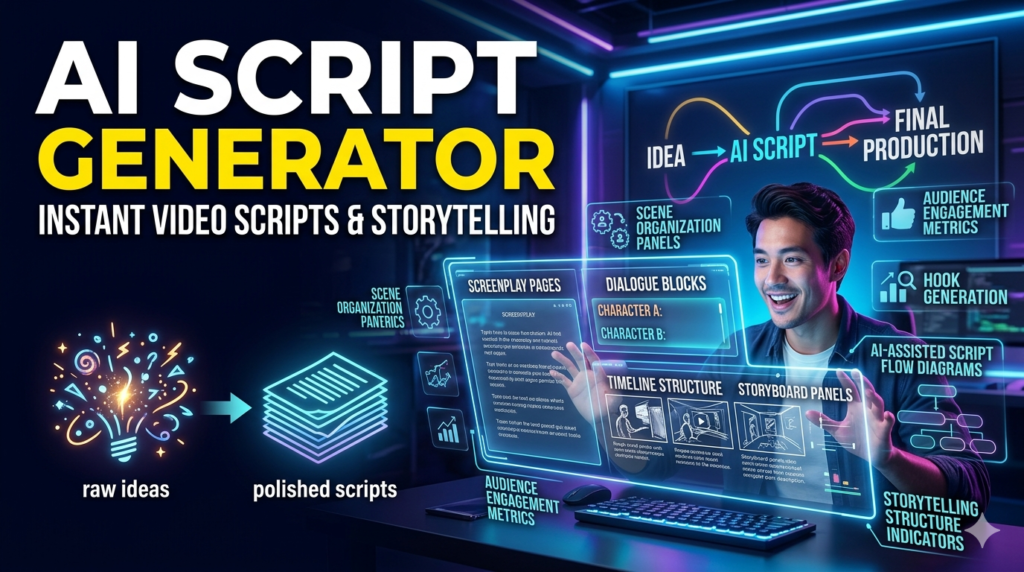
At its core, an ai script generator is software that turns a prompt your topic, audience, tone, length, format, and key points into a draft script. That draft might be a YouTube script generator output with a strong hook, beat-by-beat outline, on-camera lines, B-roll suggestions, and a call to action. Or it might be a screenplay generator producing scene headers, loglines, action lines, and character dialogue. Some tools specialize in short-form (think TikTok script generator or Instagram Reels), while others skew toward long-form (podcast episodes, training modules, brand documentaries).
But here’s what it isn’t: it isn’t a substitute for taste, lived experience, or a point of view. I once worked with a small skincare brand that used a marketing script generator to crank out a product launch video. Technically, the script was correct: clear problem/solution structure, clean benefits, compliant-sounding claims, a decent CTA. But it had zero texture. No origin story. No “here’s what went wrong when I tried three other products.” No real human mess. We kept the skeleton, rewrote the voice from scratch, added a 20-second customer anecdote, and the final video outperformed their previous launch by a wide margin. The tool gave us speed; the humans supplied the soul.
How to actually use one (a workflow that works in the real world)
The best results I’ve seen come from a repeatable workflow not one-click magic:
- Start with inputs you’d give a smart junior writer. Don’t just type make a script about budgeting. Instead: audience (new grads, overwhelmed parents, small business owners), platform (YouTube, TikTok, internal LMS), desired tone (warm, punchy, calm, funny), length (60 seconds, 8 minutes), must-include points (3 tips max), taboo topics/claims to avoid, and a sample paragraph in your voice.
- Generate multiple drafts, not one. Treat the outputs like competing rough cuts. One draft may nail structure, another may surprise you with a metaphor, a third may have the best opening hook. Your job is curation, not selection.
- Pressure-test for realism. Read dialogue out loud. If you wouldn’t say it to a friend without wincing, cut it. Replace generic lines (“In today’s fast-paced world…”) with specific observations (“I tried tracking expenses in three apps and still lost $47 last month.”).
- Layer in expertise and proof. Add concrete examples, short case studies, numbers with sources, named frameworks, or a quick expert soundbite. This is where you move from content to credible content crucial for trust and SEO.
- Optimize for the platform without sounding like an algorithm. A video script generator can suggest B-roll, on-screen text, and beat changes, which is genuinely useful. But don’t let the format dictate your message. If a platform rewards quick cuts, fine—earn them with actual turns in the story, not just visual noise.
Benefits, limitations, and the ethical side
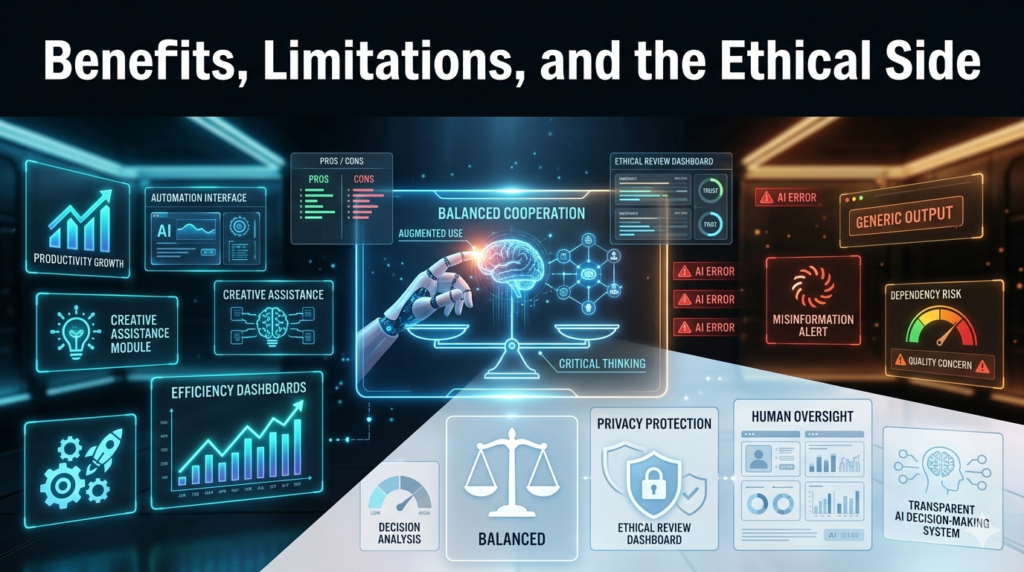
The upsides are easy to name: faster first drafts, fewer blank-page spirals, rapid iteration for A/B testing hooks, and a helpful second brain when you’re juggling five stakeholders. For nonprofits and educators especially, I’ve seen these tools democratize video: a community organizer with a powerful message but no writing background can suddenly produce a coherent script outline and a presentable draft. But the limitations matter. Many ai script generators struggle with specificity, subtext, and consistent character voice across long narratives. They can also inadvertently echo common phrasing from training data, leading to scripts that feel eerily similar to what’s already ranking.
There are real originality, plagiarism, and copyright concerns: never paste copyrighted material into prompts, and always do a sanity check for unintentional resemblance to existing films, sketches, or branded campaigns. Ethically, if you use a generated draft as the backbone of paid work, be transparent with collaborators about your process, and don’t pass off wholly unedited machine output as wholly your original creative labor. Your reputation travels faster than your content. A balanced rule I share with teams: Use the generator for structure and exploration; use your team for judgment, taste, facts, and final voice.
A few current-era best practices (that won’t go stale next quarter)
- Lead with a human moment in the first 8–15 seconds (a mistake, a contradiction, a surprising stat, a vulnerable admission).
- Keep claims accurate and non-prescriptive, especially in health, finance, legal, or parenting content. Add disclaimers when appropriate.
- Build scripts around one central promise, then prove it with 2–3 scenes/examples, not a laundry list of features.
- End with a specific CTA (“Download the template,” “Try the 10-minute version,” “Comment your industry”) rather than a generic “subscribe.”
At the end of the day, an ai script generator is a remarkably useful assistant—but you are still the director, the editor, and the person who has to answer for what gets published. If you treat it like a collaborator that drafts fast and needs notes, you’ll get genuinely strong results. If you treat it like an autopilot, your audience will spot it in the first thirty seconds.
FAQs
Q: Can an ai script generator write a ready-to-film script?
A: Sometimes for very short, simple pieces. For anything narrative, emotional, or brand-sensitive, expect heavy rewriting for voice, specificity, and continuity.
Q: Are scripts from these tools original and safe to publish?
A: Usually original in phrasing, but always check for accidental similarity to existing works, ensure you have rights for any included references, and add factual verification and unique examples.
Q: What’s the best use case for beginners?
A: Outlining (hook → points → proof → CTA), beating out a blank page, and generating alternative openings or taglines to test.
Q: How do I keep my script from sounding generic?
A: Feed it a strong voice sample, include specific anecdotes/stats, avoid broad claims, and rewrite dialogue to match how your real audience speaks.
Q: Should agencies disclose using an ai script generator?
A: Not necessarily in marketing copy, but internally you should document process, ensure originality and accuracy, and be honest with clients about who did the creative heavy lifting.
