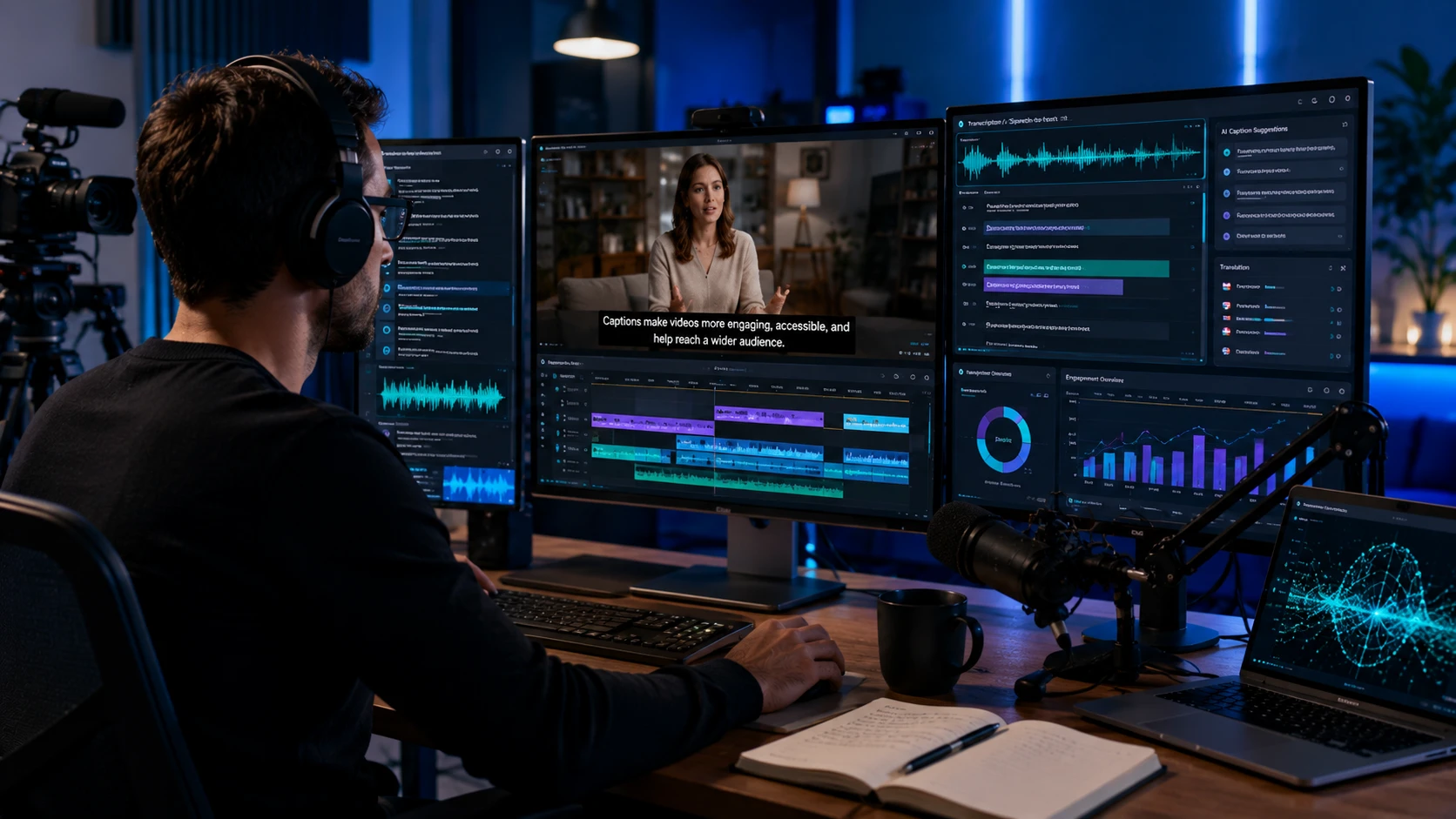
Video content has become the default language of the internet. Scroll through YouTube, TikTok, Instagram Reels, LinkedIn, or even online courses, and one thing becomes obvious very quickly: captions are everywhere. They are no longer just an accessibility feature. They improve watch time, boost engagement, help with SEO, and make videos easier to consume in noisy or silent environments. That growing demand has pushed AI subtitle generators into the spotlight. A few years ago, adding subtitles meant manually typing every spoken word, syncing timestamps, and spending hours correcting formatting issues. Today, AI powered subtitle tools can transcribe speech, identify speakers, translate languages, and generate polished captions within minutes.
For creators publishing videos regularly, that shift is enormous. But while AI subtitle generators save time, not all tools are equal, and not every automated caption is accurate enough for professional use. After testing several subtitle workflows for webinars, tutorials, podcasts, and short form social content, one thing becomes clear: AI works best when paired with human review.
What Is an AI Subtitle Generator?
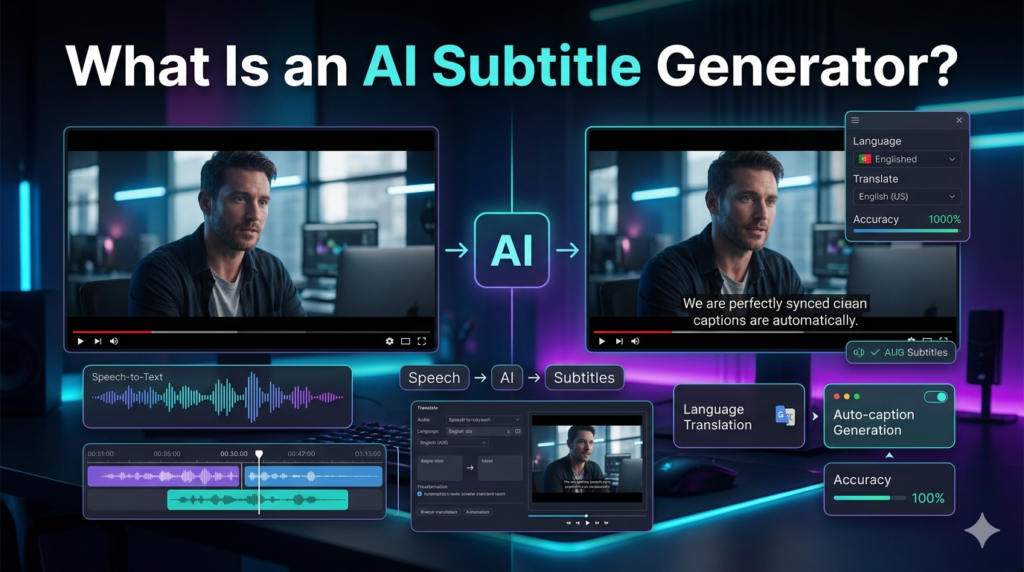
An AI subtitle generator is software that automatically converts spoken audio into written subtitles using speech recognition and natural language processing.
The process usually looks simple from the user side:
- Upload a video
- The AI detects speech
- It generates subtitles with timestamps
- Users edit mistakes if needed
- Export subtitles or burn them into the video
Behind the scenes, though, modern systems are handling accent recognition, punctuation prediction, speaker separation, background noise filtering, and sometimes even emotional tone detection. Some tools focus purely on subtitle generation, while others combine editing, translation, voice cloning, and social media formatting into one platform.
Popular AI subtitle generator tools currently used by creators and businesses include:
- Descript
- VEED
- Kapwing
- Rev AI
- Happy Scribe
- Submagic
- Adobe Premiere Pro AI captions
- CapCut auto captions
Each serves slightly different needs depending on budget, accuracy requirements, and workflow.
Why Subtitles Matter More Than Ever
One statistic that marketers often mention is that a large percentage of social media videos are watched without sound. That trend is easy to observe in daily life. People watch videos while commuting, sitting in offices, waiting in public spaces, or browsing late at night. Subtitles solve that friction instantly. But accessibility is still the most important reason. For viewers who are deaf or hard of hearing, captions are essential not optional.
Businesses ignoring subtitle accessibility are increasingly facing legal and reputational risks. There’s also a strong SEO advantage. Search engines cannot watch a video the way humans do, but they can index subtitle text. Well generated captions help platforms understand video content, improving discoverability on YouTube and Google.
In practical terms, creators often notice:
- Higher average watch duration
- Better audience retention
- More engagement on short form videos
- Increased reach in multilingual audiences
For educational content, subtitles also improve comprehension. Many viewers retain information more effectively when they can both hear and read simultaneously.
The Real Strength of AI Subtitle Tools
The biggest advantage is speed. A 45 minute interview that once took three or four hours to caption manually can now be processed in under ten minutes. For agencies, podcasters, educators, and media teams publishing at scale, that time reduction changes production economics completely. Another major benefit is multilingual translation.
Modern AI subtitle generators can translate captions into dozens of languages automatically. While the translations are not always culturally perfect, they dramatically lower the barrier to international distribution. A fitness instructor in the United States can now reach viewers in Spain, Brazil, or India without hiring a full translation team.
Short-form content creators benefit especially from styling features:
- Animated captions
- Highlighted keywords
- Dynamic text effects
- Emoji integration
- Auto-formatting for TikTok and Reels
These design focused subtitles have become part of internet culture itself. In many cases, subtitles are no longer just informational they are visual branding.
Where AI Still Struggles
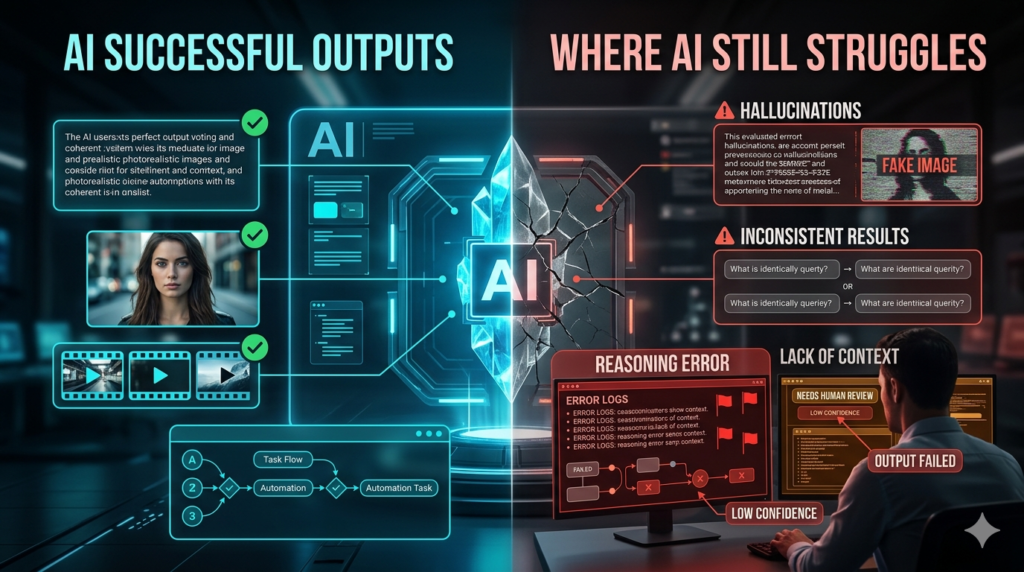
Despite rapid progress, AI subtitles are far from flawless.
Accuracy problems still happen regularly with:
- Strong regional accents
- Technical terminology
- Fast speakers
- Multiple people talking at once
- Poor audio quality
- Slang or informal speech
One podcast producer I worked with tested three AI subtitle platforms on the same interview episode. All three tools produced noticeably different transcripts. One confused industry jargon entirely, another inserted incorrect punctuation that changed sentence meaning, and the third struggled with overlapping conversation. Human editing was still necessary. This matters because subtitle mistakes can damage credibility quickly.
A small typo might seem harmless, but incorrect captions in legal, medical, educational, or corporate material can create confusion or liability concerns. Automatic translations also require caution. Literal translations often miss cultural nuance, humor, or idiomatic speech. A phrase that sounds natural in English may become awkward or misleading in another language.
Choosing the Right AI Subtitle Generator
The best subtitle generator depends heavily on how the content will be used.
For social media creators:
- Fast editing
- Stylish captions
- Vertical video formatting
- Auto-highlighting features
For businesses:
- High transcription accuracy
- Team collaboration
- Brand consistency
- Export flexibility
For educators and course creators:
- Accessibility compliance
- Multilingual subtitles
- Clear formatting
- Reliable timestamps
For filmmakers or professionals:
- Manual editing controls
- Industry-standard export files
- Advanced synchronization tools
Before committing to any platform, it helps to test:
- Accuracy on your own voice
- Export quality
- Editing speed
- Pricing structure
- Language support
- Watermark limitations
Some tools appear inexpensive initially but charge heavily for exports, translation minutes, or HD processing.
AI Subtitles and Accessibility Standards
Accessibility conversations around subtitles are becoming more serious, especially in education, government, and enterprise media. Good captions are not simply text on a screen.
Professional quality subtitles should include:
- Accurate speech transcription
- Proper punctuation
- Speaker identification
- Timing synchronization
- Non-speech audio cues when relevant
For example:
“[door slams]”
“[audience laughing]”
These details matter for accessibility compliance standards such as WCAG guidelines. AI tools are improving in this area, but many still prioritize speed over accessibility precision.
The Future of AI Subtitle Generation
The next generation of subtitle technology is moving beyond basic transcription.
Emerging features include:
- Real time live subtitles
- Emotion aware caption styling
- Context based translation
- Automatic clip generation from transcripts
- AI voice synchronization
- Personalized subtitle formatting
Live multilingual subtitles during conferences and webinars are becoming increasingly practical. Some platforms already provide near real-time translations for virtual events.
There is also growing integration between subtitle generation and content repurposing. A single video transcript can now become:
- Blog posts
- Social captions
- Email newsletters
- Podcast summaries
- Searchable knowledge bases
That broader content ecosystem is where AI subtitle tools are becoming especially valuable.
Final Thoughts
AI subtitle generators have shifted from being optional editing tools to essential parts of modern video production. They save enormous amounts of time, improve accessibility, increase audience reach, and support multilingual communication at scale. Still, automation is not a substitute for quality control.
The most effective workflow combines AI speed with human review especially for professional, educational, or branded content where accuracy matters. As video continues dominating online communication, subtitles are no longer an afterthought. They are part of the viewing experience itself. And increasingly, viewers expect them.
FAQs
Q: What is the best AI subtitle generator?
A: The best tool depends on your needs. Descript, VEED, Calcutta, and Lapwing are popular for creators, while Rev and Adobe Premiere offer more professional workflows.
Q: Are AI-generated subtitles accurate?
A: They are often highly accurate with clear audio, but mistakes still happen with accents, background noise, or technical language. Manual review is recommended.
Q: Can AI subtitle generators translate videos?
A: Yes. Many platforms support automatic subtitle translation into multiple languages, though human editing improves quality.
Q: Do subtitles help SEO?
A: Yes. Subtitles provide searchable text that helps search engines understand video content, improving discoverability.
Q: Are AI subtitle generators free?
A: Some tools offer free plans with limitations such as watermarks, export caps, or restricted video length.
Q: Can AI generate subtitles in real time?
A: Yes. Some advanced platforms now support live captions for meetings, webinars, and streaming events.
